JP means “just playing” in texts and online messages. It’s what you type when you want someone to know you’re joking around or not being serious about what you just said.
Why You’re Probably Here
You got a text that ended with “jp” and you’re sitting there wondering if the person was serious or not. Maybe someone roasted you in the group chat and threw a “jp” at the end. Or you saw it all over TikTok comments and you’re tired of pretending you know what it means.
What JP Really Means When Someone Uses It
When someone types “jp,” they’re basically hitting the undo button on whatever they just said. It’s the text version of that moment when you say something a little too bold in person and then laugh to show you’re not being completely serious.
People use it instead of writing out “I’m just joking” because it’s faster and feels less formal. It keeps things casual and doesn’t make a big deal out of walking something back. The feeling behind it? Protection. It lets you test the water with a risky comment, a flirty line, or even something mean, without fully committing to it.
How It Shows Up in Real Conversations
You’ll see “jp” pop up most often after someone says something that could be taken the wrong way. Like when your friend texts “you’re literally the worst person I know jp” after you cancel plans. It’s common in group chats where people are throwing jokes around fast. Someone will make fun of another person’s outfit, music taste, or game skills, then add “jp” so nobody thinks they’re actually being harsh.
Gamers use it a lot during matches. If someone’s talking trash and then types “gg you’re terrible jp,” they’re trying to keep it friendly. The “jp” is what separates playful banter from actual toxicity.
Read More: What Does W Mean in Text? The Real Meaning Explained
When Tone Changes Everything
The same two letters can mean totally different things depending on who’s saying it. If your best friend texts “I hate you jp,” you know they’re messing around. But if someone you barely know sends the exact same thing? That “jp” might not feel like enough to erase the sting.
Watch out for the delayed “jp.” If someone says something harsh, you react, and then they hit you with “jp,” it feels like they’re backpedaling because they realized they went too far.
The other trap? When someone uses “jp” to test how you feel about something real. “I think I like you jp” isn’t always a joke. Sometimes people hide real feelings behind it to see how you respond without risking full rejection.
When You Should Skip the JP
Don’t use it in work messages or emails. Even if you have a chill boss, “The report’s due tomorrow but who cares jp” makes you look unprofessional and confusing.
Skip it when someone’s genuinely upset or stressed. If your friend just told you something serious and you reply with “that sucks jp,” you look like you’re not taking them seriously.
Be careful with people who might not know what it means—anyone older or someone who doesn’t spend much time online. And on public posts where strangers can see, “jp” won’t save you if what you said was actually offensive.
Other Ways to Say the Same Thing
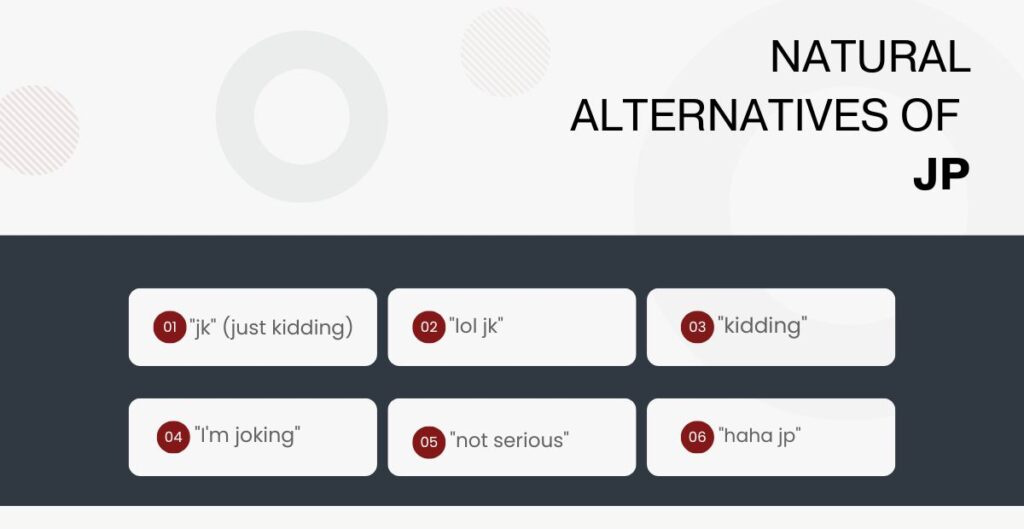
If you want to keep it light:
- “jk” (just kidding)
- “lol jk”
- “kidding”
If you’re trying to be clearer:
- “I’m joking”
- “not serious”
If you want it more playful:
- “haha jp”
- “😂 jp”
The emoji combo works well because it adds back some of the tone that text strips away.
Related Other Slang Term: What Does PSA Mean in Text? It’s Not What You Think
Real Examples You Might Actually See
“Your haircut looks interesting jp” — Making fun without being too mean.
“I’m blocking you jp” — Pretending to be mad when you send too many memes.
“You should buy me food jp… unless?” — Half-joking request testing if you’d actually do it.
“Marry me jp” — Flirty joke that might not be 100% a joke.
“You’re so annoying jp love you” — Classic friend roast with a safety net.
“I’m jp chill” — Defense when someone didn’t laugh at their joke.
“Worst take I’ve ever seen jp” — Internet argument where someone’s trying not to seem too pressed.
Where You’ll See It Most
JP lives mostly on Instagram, TikTok, and Snapchat. It fits the vibe of those apps—quick, casual, young. You’ll see it in text messages between friends who are used to that style of talking.
It’s less common on Twitter because people there tend to either commit to their jokes or use longer explanations. Younger people use it more than older people, but that’s shifting as more parents pick up slang from watching TikToks.
What People Get Wrong About It
Some people think “jp” makes everything okay. It doesn’t. You can’t say something genuinely hurtful and then act like two letters erase it.
Others use it so much that it loses meaning. If every other message ends with “jp,” people stop taking you seriously at all.
And here’s a big one: people assume it always means “just playing.” In some gaming communities, “JP” can mean Japan (like “JP server”). Context matters, and if you’re confused, it’s okay to just ask.
Read More: What Does UWU Mean in Text? The Real Meaning Explained
Quick Questions People Ask
Can JP sound rude even if you don’t mean it that way?
Yes. If you say something harsh and add “jp,” some people will still only hear the harsh part.
Is it the same as JK?
Pretty much, but “jp” feels newer and more casual. “JK” has been around since early internet days and can feel a little outdated to some people now.
What if someone uses it and I don’t know if they’re actually joking?
Trust your gut. If it felt weird before they added “jp,” it’s okay to ask “wait are you serious or not?” directly.
Do girls and guys use it differently?
Not really, but girls might use it more when they’re worried about seeming mean. Guys might use it when they’re testing flirty waters. But that’s more about individual people than gender rules.
Should I use it in a comment on someone’s post?
Only if you’re close with them. Public comments hit different than private texts, and strangers reading it won’t have your context.
The Bottom Line
JP is just another tool people use to navigate texting without tone. It works when both people understand the vibe. It fails when someone’s hiding behind it to avoid accountability or when it gets slapped onto something that wasn’t actually funny. If someone uses it on you and you’re still not sure how to feel, you’re allowed to need more than two letters to understand where they’re coming from.