ASL in texting usually means “as hell” — it’s how people emphasize something strongly, like saying “I’m tired asl” instead of “I’m very tired.” But if someone messages you “ASL?” out of nowhere, they’re probably asking for your age, sex, and location, which is an old internet habit that most people find weird now.
Why This Gets Confusing
You’ve probably seen “asl” pop up in comments or group chats and thought, “Wait, what?” The problem is this abbreviation has completely different meanings depending on how it’s used. One second it’s your friend saying “this pizza is good asl”, and the next it’s some random person sliding into DMs with “asl?” like it’s 2003. People also mix it up with American Sign Language, which shares the same letters but has nothing to do with texting slang.
What It Actually Means in Real Life
When someone types “asl” at the end of a sentence, they’re cranking up the intensity. It’s the text version of stretching out a word when you talk. The “as hell” version caught on because it’s faster to type than the full phrase and sounds less harsh than typing out “as fuck.” Gen Z grabbed onto it hard, especially on TikTok and Snapchat, where speed matters.
The “age/sex/location” meaning comes from AOL chatroom days when people would start conversations by immediately asking personal details. These days, if someone opens with “ASL?” it usually means they either don’t know how outdated that sounds, or they’re being creepy on purpose.
How People Use It in Everyday Situations
The “as hell” version shows up in quick reactions, complaints, compliments, and status updates. It sits at the end of the sentence, right where you’d naturally pause for emphasis if you were talking.
The “age/sex/location” usage mostly happens in sketchy situations now — dating apps where people haven’t figured out that direct questions work better, or when someone’s trying to vet a stranger they matched with online. Sometimes friends joke around with it ironically because everyone knows it sounds ridiculous.
Read Also: What Does TT Mean in Text? The Real Answer
Tone & Context (This Is Where Things Get Tricky)
Here’s where you need to pay attention: “asl” changes meaning based on where it sits in the message.
At the end of a sentence? It’s “as hell.” Your friend isn’t asking you anything — they’re just emphasizing. “This song slaps asl” means they really like the song.
Standing alone with a question mark? That’s someone asking for your personal info.
If you’re texting with someone older — like a parent or teacher — and you say “I’m tired asl,” they might genuinely think you’re asking them a question. That generational gap is real.
One warning: if a stranger messages you “asl?” and you don’t know them, don’t answer. It’s either someone living in the past or someone fishing for information they shouldn’t have.
When You Should NOT Use This Term
Don’t use “asl” (as hell) in work emails, texts to teachers, or formal situations where you’re trying to sound put-together. “The deadline is tight asl” will get you side-eyed by your manager.
Never open a conversation with “ASL?” unless you want to immediately come across as outdated or invasive.
Natural Alternatives (Grouped by Tone)
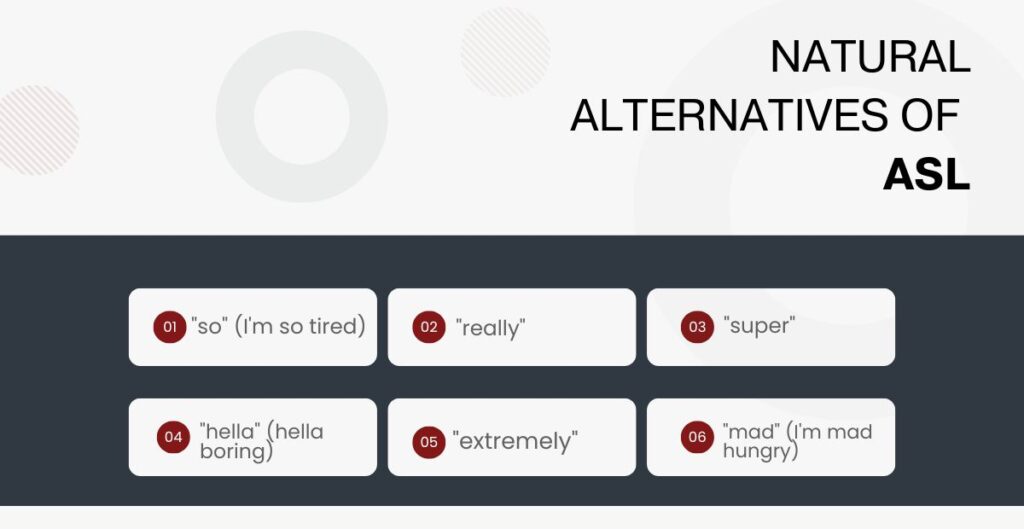
Casual / friendly:
- “so” (I’m so tired)
- “really” (really hungry right now)
- “super” (super cold in here)
Playful / joking:
- “mad” (I’m mad hungry)
- “hella” (hella boring)
Polite / professional:
- “very” (I’m very interested)
- “extremely” (extremely busy)
Read Also: What Does PSA Mean in Text? It’s Not What You Think
Real-Life Examples
“Bro I’m hungry asl can we get food”
“This movie is scary asl I can’t watch”
“Why is it hot asl in February”
“Practice was long asl today”
“That joke was funny asl 😭”
“Nah this game is boring asl I’m getting off”
Notice how each one could just say “very” or “really,” but “asl” gives it that casual, conversational punch.
Platform or Culture Notes
TikTok and Snapchat are where “asl” (as hell) lives and breathes. You’ll see it in captions, comments, and video text overlays constantly. Instagram too, but slightly less often.
Gen Z owns “asl” as an intensifier. If you’re over 30 and you use it, you might sound like you’re trying too hard. Millennials tend to stick with “af” or “so” instead.
The “age/sex/location” version is basically dead except as an ironic joke. When Millennials see it, they get nostalgic. When Gen Z sees it, they think it’s weird.
American Sign Language has nothing to do with any of this, but if you’re searching “ASL” in an educational context, you’ll run into it. Just know that lowercase “asl” in a casual text has zero connection to the language.
Common Misunderstandings
People think it’s always aggressive.
It’s not. “Cute asl” is a compliment. “Tired asl” is just being honest.
Older people read “asl” and hear a question.
Younger people read “asl” and hear emphasis. This causes weird text exchanges where someone’s parent replies “What do you mean ASL?” and everyone’s confused.
“ASL” in all caps usually points to age/sex/location or American Sign Language, while “asl” lowercase leans toward “as hell.”
But people aren’t always that precise when they’re typing fast. It’s not the same as “asl” in movies. If you heard it in a film, you might be looking at “average shot length,” which is a film editing term.
Read More: What Does W Mean in Text? The Real Meaning Explained
FAQs
Is it rude to use “asl” when texting?
Not if you’re using it as “as hell” with friends. But opening with “ASL?” to a stranger is rude because it feels invasive and outdated.
Can “asl” be sarcastic?
Yes. “Wow this is fun asl” when you’re clearly miserable is peak sarcasm.
Does it mean the same thing on every app?
Mostly yes for “as hell,” but some platforms skew older (like Facebook), where people might still think of the age/sex/location version first.
Is “asl” only a Gen Z thing?
The “as hell” version? Pretty much. Older internet users know “ASL?” as the chatroom question.
What if someone asks me “ASL?” on a dating app?
They’re asking for basic info, but it’s a lazy way to do it. You can answer if you want, or just say “hey, what’s up?” and start an actual conversation.
Wrapping This Up
If you see “asl” tacked onto the end of a sentence, someone’s just emphasizing how they feel. If you see “ASL?” sitting alone, someone’s either stuck in the 90s or fishing for details. Look at where it shows up, who’s saying it, and how it’s written. Once you get the pattern, it stops being confusing. You don’t need to use it if it doesn’t feel natural to you, but at least now you’ll know what people mean when they do.