MYF usually means “Miss Your Face” — a sweet, casual way to tell someone you’re thinking about them without getting too emotional about it. It’s lighter than saying “I miss you” but still shows you care.
Why You’re Probably Here
You got a text or saw a comment with “MYF” and you’re sitting there wondering if it’s affectionate, if it’s code for something else, or if you’re supposed to respond a certain way. Maybe it came from someone you’re talking to, or you spotted it under a friend’s Instagram post.
What It Actually Means in Real Life
When someone types “MYF,” they’re trying to express missing you without making it a big deal. It’s the texting equivalent of a casual nudge that says “hey, I notice you’re not around.”
People pick this instead of “I miss you” because those three words carry weight. MYF keeps things light and almost playful. Sometimes people use it specifically because they want to miss your actual presence — your face, your energy, the vibe you bring — not just the idea of you.
How People Use It in Everyday Situations
You’ll mostly see MYF in texts between people who already have some connection. Friends who haven’t hung out in a while might drop it in a message. Someone you’ve been talking to romantically might send it after you’ve been busy for a few days.
It shows up a lot in replies to social media posts. If you post a selfie or story, someone might comment “MYF” to say they wish they could see you in person instead of through a screen. In group chats it’s less common since it’s more of a personal thing.
Tone & Context (This Really Matters)
MYF can be genuinely sweet or slightly passive-aggressive depending on what’s happening between you and the sender.
If you’ve been texting someone regularly and suddenly go quiet for a couple days, their “MYF” might actually mean “where’d you go?” It’s not angry, but there’s a little edge to it.
From someone you’re interested in, MYF often leans flirty. It’s a way of saying they’re thinking about you without risking full vulnerability. With close friends, it’s almost always genuine and warm with no hidden meaning.
One warning: if someone you barely know sends “MYF,” it can feel forward or weird. Missing someone’s face implies you’ve spent enough time together to actually know their face.
More Post: What Does PSA Mean in Text? It’s Not What You Think
When You Should NOT Use This Term
Don’t use MYF with coworkers or in professional settings. It’s too casual and could come across as inappropriately friendly.
Skip it if you’re in a fight with someone. Sending “MYF” during tension seems like you’re trying to smooth things over with cuteness instead of addressing what’s wrong.
Avoid public comments if your relationship with that person is complicated. If you had a messy breakup and comment “MYF” on their post, everyone watching will find it awkward.
If someone just shared bad news, MYF might sound too light and playful when they need actual support.
Natural Alternatives (Grouped by Tone)
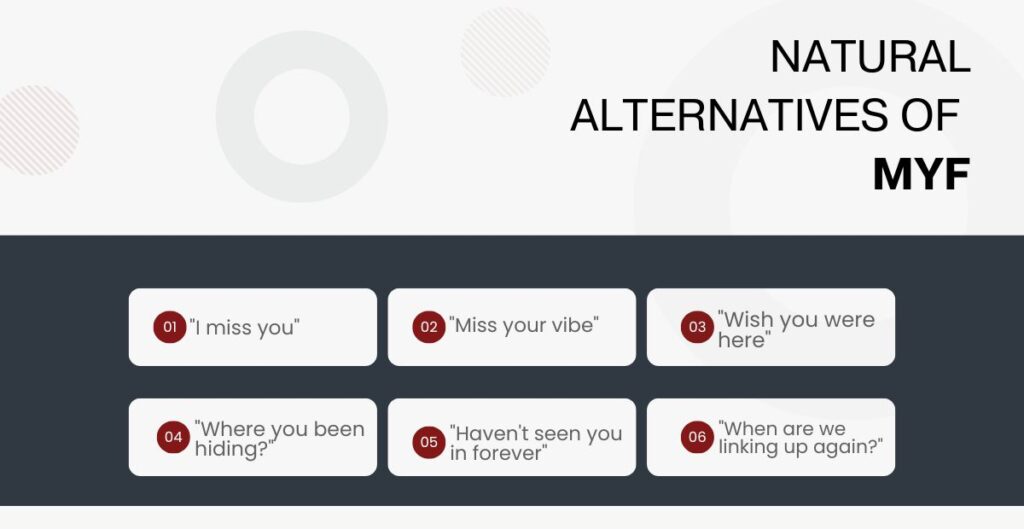
Casual and friendly:
- “Haven’t seen you in forever”
- “When are we linking up again?”
Playful and light:
- “Where you been hiding?”
- “Miss your vibe”
Sweet and sincere:
- “I miss you”
- “Wish you were here”
Real-Life Examples
Between friends: “Just saw our old pics from summer… MYF 😭”
Someone you’re dating: “You’ve been MIA all week, MYF babe”
Reply to a story: sees your Snapchat from a party “MYF! Why wasn’t I invited??”
After not talking for a bit: “Random but MYF. We should catch up”
Slightly sarcastic: you haven’t responded in 6 hours “Oh so you’re alive… MYF I guess 🙄”
Instagram comment: under your throwback photo “This era >> MYF”
You like this slang also: What Does W Mean in Text? The Real Meaning Explained
Platform Notes
On Instagram and Snapchat, MYF tends to show up more because those platforms are visual. People see your face in posts and stories, which naturally triggers the “miss your face” feeling.
TikTok comments sometimes use MYF but there’s also a newer, sassier version that means “Mind Your Business, Friend” — basically telling someone to back off in a playful way. If someone’s responding to drama or nosy comments, it’s probably the sassy version.
Discord and gaming chats occasionally use MYF as “my fault” after messing up a play. In Volleyball Legends specifically, some players use it for “move your feet,” though that’s pretty niche.
Common Misunderstandings
The biggest mix-up is thinking MYF is always romantic. Close friends use it all the time with zero romantic feelings involved.
Some people read it as desperate or clingy if you send it too often. Once in a while is sweet. Every other day starts feeling like pressure.
There’s also confusion about whether you’re supposed to respond with something equally emotional. You don’t have to. A simple “miss you too” or heart emoji works fine.
People sometimes don’t realize that MYF needs actual time or distance to work. If you send it to someone you hung out with yesterday, it feels forced.
FAQs
Is MYF always flirty?
No. Friends use it constantly. It only gets flirty based on your relationship with the person and how they usually talk to you.
Can MYF be passive-aggressive?
Yes. If you’ve been ignoring someone and they hit you with “MYF,” there’s probably a little bit of “you’ve been ghosting me” energy behind it.
Should I respond to MYF?
Usually, yeah. Even just “miss you too” or a quick emoji. Leaving it on read can seem cold since they put themselves out there.
What if I don’t miss them back?
You can redirect it. Something like “been so busy, let’s hang soon though” acknowledges them without lying.
Does it mean something different from a guy vs a girl?
Not really. The meaning stays the same — it’s the relationship and context that change how it feels.
Wrapping This Up
MYF is one of those terms that feels simple until you actually have to decode it in a real conversation. Most of the time it’s genuinely sweet and harmless. But like anything in texting, the meaning shifts based on who’s saying it, when they’re saying it, and what’s been going on between you two.