SN usually means “Say Nothing” in texts and chats. It’s a quick way to say “don’t worry about it,” “no problem,” or “keep this between us”. Sometimes it can also mean “Screen Name” (especially on Snapchat) or “Sike Nah” (like saying “just kidding”).
Why This Gets Confusing
You’re scrolling through comments or someone texts you “SN” after you said thanks, and you’re sitting there like… what? The same two letters mean totally different things depending on who’s saying it and where. Your friend might use it to brush off a compliment, while someone else drops it after sharing gossip.
What It Really Means When Someone Uses It
When someone types SN, they’re keeping things chill and informal. It’s the texting version of a casual wave-off. You could type out “No problem at all, happy to help!” or you could just say “SN.”
The interesting part? It carries a loyalty vibe. Saying “SN” after someone tells you something personal means “I got you, I won’t tell anyone”. It’s like a digital pinky promise but way less dramatic.
How It Shows Up in Real Conversations
You’ll see SN pop up mostly as a response. Someone compliments your outfit, you reply “SN” (downplaying it). A friend apologizes for being late, you hit them with “SN” (no hard feelings). It’s common in group chats when someone’s about to spill tea and adds “SN tho” at the end—translation: this stays in the group.
The medical world uses it too, but that’s different. Doctors might write “s’n” on prescriptions meaning “without a name” (it’s Latin), and nursing students see SN for “Student Nurse” on hospital schedules.
When the Meaning Changes Based on Who’s Talking
If a girl texts you “SN” after you thank her for advice, she’s being modest—like “it’s nothing.” But if you’re in an argument and she sends “SN” after you explain yourself? That’s her way of saying “I don’t want to hear it right now.” Same letters, totally different energy.
From a guy, SN usually lands as “I got you” or “we’re good.” But if he says something nice followed by “SN!” with an exclamation point, he might be joking around. Like “You’re the smartest person I know… SN!” means he’s messing with you.
Close friends can say SN about anything and you’ll get it. But if someone you barely know uses it, you might wonder if they’re being dismissive or genuinely casual.
Read More: What Does PMO Mean in Text? The Meaning That Changes Everything
Times You Should Skip Using SN
Don’t use this at work. If your boss thanks you for finishing a report early, responding with “SN” reads as unprofessional or even rude. Same goes for teachers, clients, or anyone you need to keep things formal with.
It sounds weird in serious moments. If someone’s apologizing for something that actually hurt you, hitting them with “SN” makes it seem like you’re brushing off their apology. And if you’re the one apologizing? Never end with “SN”—it makes your apology sound insincere.
Public posts are iffy. Commenting “SN” under someone’s Instagram post might confuse people who don’t know you’re being casual.
Other Ways to Say the Same Thing
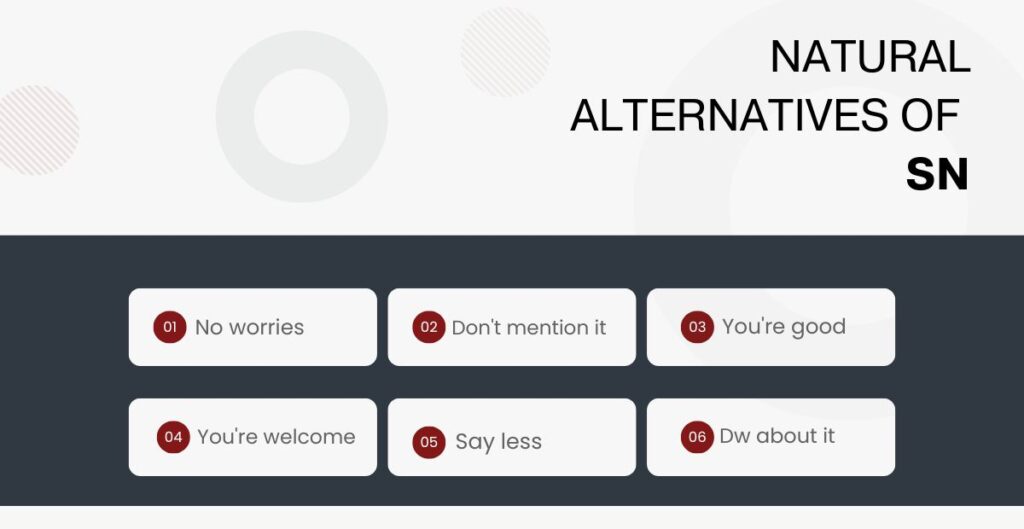
Friendly:
- No worries
- Don’t mention it
- You’re good
Polite:
- You’re welcome
- Anytime
- Glad I could help
Playful:
- Gotchu
- Say less
- Dw about it
What These Texts Actually Look Like
Friend thanks you: “Thanks for covering my shift yesterday!” “SN, I wasn’t doing anything anyway”
Group chat apology: “My bad for being late to the movie” “SN we waited like 5 min”
Keeping secrets: “Don’t tell anyone I failed that test” “I won’t, SN”
Joking around: “You’re definitely gonna ace this exam… SN!” “Wow thanks for the confidence boost 😑”
Snapchat usernames: “What’s your SN? I’ll add you” “It’s @jess.martinez”
Brushing off compliments: “Your room looks so clean!” “SN it’s whatever”
Instagram story: “Just got my license! SN: took me three tries lol”
Being dismissive: “I was just trying to explain—” “SN I don’t wanna talk about it”
Read More: What Does LMS Mean in Texting? Why Everyone Gets This Wrong
Where You’ll See It Most
Snapchat users say SN when asking for usernames because “Screen Name” is still used there. Instagram people use it for “Side Note” in captions when adding an extra thought. TikTok comments are full of “SN” in the “Say Nothing” sense—usually under videos about loyalty or keeping secrets.
Younger people (teens and early 20s) use it way more than older folks. If you’re texting someone over 30 and drop an SN, they might genuinely ask what you mean. Also, if you’re in the UK, you might hear “Say Nothing” or “Say Less” out loud—it’s tied to London slang and music culture.
Why People Get It Wrong
The biggest mixup? Thinking SN is always friendly. Tone matters, and texts delete all the clues your voice would give. Someone might send “SN” thinking they sound chill, but the other person reads it as cold or annoyed.
Using it too much makes people think you don’t care. If you reply “SN” to everything, it loses its meaning.
And there’s the Snapchat confusion. New users see “What’s your SN?” and think it’s mysterious slang when it’s literally just asking for your username.
More Post: What Does ASL Mean in Text? It’s Not What You Think
Common Questions People Actually Ask
Is SN rude to use?
Between friends, it’s fine. But if you’re texting someone you don’t know well or someone older, it can come off as dismissive.
Can it be sarcastic?
Yes. “Oh sure, you’re sooo busy… SN” is dripping with sarcasm. You have to read the chat to know if someone’s being genuine or snappy.
Does everyone know what it means?
Nope. It’s common among younger people who are online a lot, but plenty of people have never seen it.
What if I use the wrong meaning?
You’ll confuse someone for a second, but just clarify and move on.
Is “Sike Nah” the same as “Psych”?
Pretty much. It’s just a newer way of spelling the same joke—saying something and then immediately taking it back.
The Bottom Line
SN works great when everyone’s on the same page. It keeps texts short and sounds relaxed. But pay attention to who you’re texting and what you’re talking about. If someone doesn’t use slang much, they probably won’t get SN. And if things are serious or professional, skip it completely. When you’re unsure, adding a few extra words never hurts.