TT usually means someone’s crying or sad—it’s like a little face with tears streaming down (T_T). But depending on who’s texting and where, it can also mean TikTok, “too true” when you’re agreeing with something, or even just a quick way to say you’re talking to someone.
Why This Gets Confusing
You’re scrolling through comments or get a text that just says “TT” and you’re like… what? Is this person upset? Are they telling me to check TikTok? Are they agreeing with me?
It’s frustrating because the same two letters mean totally different things depending on who sent it and where you saw it. Your friend might use it one way, your gaming buddy uses it another way, and that random person on Instagram means something else entirely.
What It Actually Means in Real Life
TT started as an old-school emoticon—two eyes with tears coming down. People used it when they felt bummed out without typing a whole paragraph.
When someone drops a “TT” in conversation, they’re expressing emotion quickly. It sits in that middle zone—showing you care or you’re affected by something, without making it a whole thing. The crying face version feels soft. It’s not angry crying or serious grief—it’s more like “aw man, that sucks” or “that’s so cute it hurts.”
Read More: What Does K Mean in Text? And Why It Might Sound Rude
How People Use It in Everyday Situations
You’ll see TT in quick back-and-forth texts. Someone tells you they failed a quiz, you might reply “omg TT” to show sympathy. Or you’re venting about your day and end with “I’m so tired TT.”
In group chats, people throw it in when everyone’s sharing bad news or complaining together. One person says their shift got extended, someone else replies “TT same,” and suddenly everyone’s bonding over shared misery.
On social media comments, it works as a reaction to sad videos or touching posts.
The TikTok meaning is different—people write “TT” in their bio or captions to mean they’re on TikTok. Like “follow my TT” or “link in TT.”
Tone & Context Matter More Than You Think
The exact same “TT” can land completely differently based on your relationship with the person.
If your close friend sends “TT” after telling you something personal, they want comfort or acknowledgment. But if someone you barely know sends “TT” out of nowhere, it might feel attention-seeking.
The crying face version can also be playful. When you drop your phone but it doesn’t crack, texting “almost broke my phone TT” is joking around. You’re being dramatic on purpose.
Here’s the warning: don’t use TT when someone’s dealing with something actually serious. If a friend tells you about a real loss, responding with just “TT” comes off careless. It works for everyday frustrations, not real pain.
Guys especially will send “TT” after losing a game or something minor, and it’s clearly ironic. They’re poking fun at themselves. But that doesn’t always translate through text, and someone might think you’re genuinely upset.
You like it: What Does FSS Mean in Text? Definition, Examples & When to Use It
When You Should NOT Use This Term
Don’t use TT in work emails or professional messages. It reads as unprofessional. Your boss doesn’t need to see “meeting ran late TT.”
Avoid it with people who don’t text much or aren’t online often. Older relatives or formal acquaintances won’t get it.
If you’re apologizing for something real, don’t add TT. “Sorry I forgot your birthday TT” sounds insincere, like you’re making it about your feelings instead of theirs.
Public comments on serious posts are another no-go. Someone shares something vulnerable, and a “TT” response can seem dismissive.
Natural Alternatives Depending on Your Mood
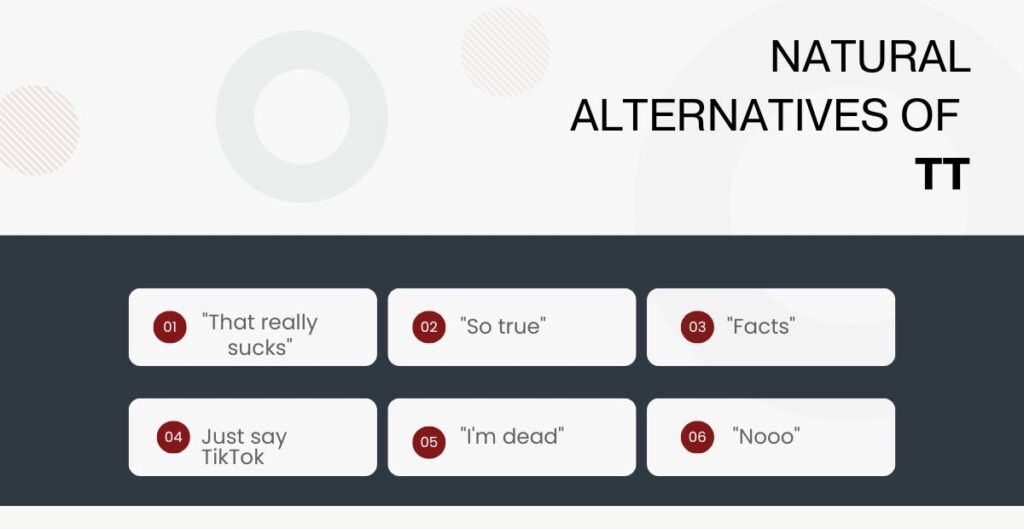
When you’re genuinely sympathetic:
- “That really sucks”
- “I’m sorry, that’s rough”
When you’re being playful:
- “Nooo” (with multiple o’s)
- “I’m dead”
When you want to agree strongly:
- “So true”
- “Facts”
When you mean TikTok:
- Just say TikTok
- The actual @ username
Real-Life Examples That Actually Happen
After bombing a test: “Just left the exam… TT”
Friend complaining about work: “My manager scheduled me every weekend this month” “TT that’s awful”
Seeing a cute dog video: “Why is he so small TT”
Gaming chat after losing: “Got destroyed in ranked TT”
Instagram caption: “New vid up on my TT, go check it out”
Snapchat after minor inconvenience: “Dropped my burrito TT” (clearly joking)
Group chat solidarity: “Everyone’s going out but I have to study” “TT felt, I’m stuck working”
Platform and Generation Stuff Worth Knowing
Instagram and Snapchat users lean toward the crying face meaning, especially in Stories and replies. You’ll rarely see someone mean TikTok in a Snap conversation—that’s more of a bio thing.
Younger people (Gen Z mainly) get all the meanings instantly because they’ve grown up switching between them. The crying face version is the safest bet most of the time.
Gaming communities sometimes use TT for “tough to” like “TT win” (tough to win) or just the crying face when they’re tilted.
The “too true” meaning is less common. Usually people just say “true” or “fr” (for real) now. But in some friend groups, especially guys texting, TT still gets used for strong agreement.
Where People Get It Wrong
The biggest mixup is thinking someone’s sad when they’re actually joking. Text doesn’t carry voice tone, so that playful “TT” after something minor can read as genuine distress.
Some people overuse it, and then it loses meaning. If every single message ends with TT, people stop taking it seriously.
Girls tend to use the crying face version more emotionally, while guys often use it sarcastically or casually. That’s not a hard rule, but it’s a pattern people notice.
Some folks think it’s always negative. But you can use TT for cute-sad things too, like “puppies are so tiny TT” where you’re overwhelmed by cuteness.
Common Questions People Actually Ask
Is TT rude to send?
Not usually, but it can be if you use it dismissively or in the wrong context. It’s casual, so save it for casual situations.
Can it be sarcastic?
Yes. People definitely use it ironically when something minor goes wrong.
Does it mean crying everywhere?
Mostly, yeah. The TikTok meaning is obvious when it’s in a bio or caption. Context makes it clear.
Do older people understand it?
Probably not if they’re not active on social media or don’t text with younger people often.
Is saying TT the same as sending 😭?
Not quite. TT feels more casual and less intense. It’s softer, almost cute-sad instead of dramatic-sad.
Wrapping This Up
TT makes sense once you’ve seen it enough times in context. Most of the time, someone’s expressing some version of “this is sad/frustrating/cute” without making it a big deal.
Pay attention to who’s saying it and what you’re talking about. That’ll tell you way more than memorizing definitions. And if you’re still not sure? Just ask.
Meta
TT in texts usually means someone’s sad or crying, but it changes based on context. Learn the real meanings, see examples, and avoid awkward misunderstandings.