IDEK stands for “I Don’t Even Know.” It’s what you type when regular confusion isn’t enough—when something is so weird, messy, or overwhelming that you can’t even begin to explain it.
Why You’re Probably Looking This Up
You got a text that just said “idek” and you’re sitting there wondering if the person is mad, confused, or just being lazy. Maybe someone commented it under a wild TikTok and you’re not sure if they’re laughing or genuinely lost. It’s one of those terms that looks simple but can mean different things depending on who’s saying it and why.
What It Actually Means in Real Life
IDEK isn’t just “I don’t know” with extra letters. When someone types IDK, they’re missing information. When they type IDEK, they’re overwhelmed, frustrated, or so confused they’ve given up trying to figure it out.
Think of it like this: IDK is when you don’t know what’s for dinner. IDEK is when your whole day fell apart and now someone’s asking you about dinner and you’re like… seriously?
It’s the text version of throwing your hands up. You’re either too tired to care, too confused to explain, or dealing with something so ridiculous that words fail you.
How People Use It in Everyday Situations
Your group chat is trying to pick a movie and after twenty minutes of back-and-forth, someone just types “idek anymore” because the decision feels impossible.
It shows up when someone asks you to explain drama. “Wait, why did they break up?” “Idek, it’s complicated.” You’re not hiding information—you genuinely can’t untangle the mess.
People use it as a conversation pause button. When you’re texting and don’t have the energy to get into something, IDEK works as a soft exit.
Someone posts something chaotic on their story—maybe a terrible haircut or a car with three flat tires—and the replies are just “IDEK 💀” because what else is there to say?
Read More: What Does LYK Mean in Text? It’s Not What You Think
Tone & Context (This Part Really Matters)
From a close friend during a vent session? It means they trust you enough to admit they’re lost.
From someone you just started talking to? It might mean they’re not that interested in the conversation. If you’re asking genuine questions and getting “idek” as the only reply, they’re probably checked out.
In a serious conversation? IDEK can come off as avoiding the issue. If your partner asks “What’s wrong?” and you say “idek,” it might sound like you’re shutting them out.
With the right emoji, the whole vibe changes. “Idek 😂” is playful. “Idek 😐” is flat and annoyed. “Idek 🤷♀️” is genuinely clueless.
Big warning: Don’t use IDEK when someone’s asking you something important. If your boss texts about a deadline or a friend asks if you’re okay after something rough, “idek” makes you sound careless.
When You Should NOT Use This Term
Skip IDEK in work emails or professional chats. It looks sloppy and unprofessional. Write out “I’m not sure” or “I’ll need to check on that.”
Don’t use it with parents or older relatives who aren’t into text slang. They’ll either not get it or think you’re being a smart-aleck.
Avoid it when someone’s genuinely upset and needs support. If your friend is going through something hard, “idek” sounds like you don’t care enough to try. Even if you really don’t know what to say, use real words.
Don’t spam it as your default reply. If every third message from you is “idek,” people will think you’re either extremely scattered or just boring to talk to.
Read Also: What Does HMJ Mean in Text? Real Answer Explained
Natural Alternatives (Grouped by Tone)
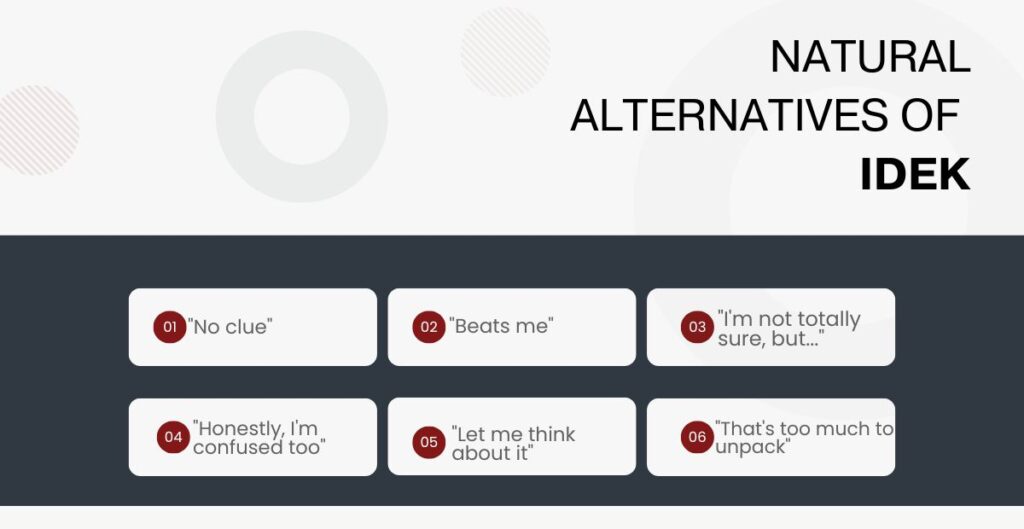
When you want to sound more interested:
- “I’m not totally sure, but…”
- “Honestly, I’m confused too”
- “Let me think about it”
When you’re being casual but clear:
- “No clue”
- “Beats me”
- “Your guess is as good as mine”
When you’re genuinely overwhelmed:
- “I can’t even process this right now”
- “That’s too much to unpack”
When you’re being playful:
- “Idk man, you tell me”
- “What even is happening”
Real-Life Examples
Friend: “Why did she post that cryptic story about trust issues?”
You: “Idek, could be about anyone”
Group chat planning: “Okay but what time works for everyone?”
Someone: “idek my schedule’s a mess this week”
After watching a confusing movie: “So wait, was he dead the whole time?”
Friend: “Idek I stopped trying to follow it halfway through”
Friend sends you a picture of someone’s wild outfit:
You: “IDEK 😭 who let them leave the house like that”
Someone asks your opinion on complicated drama:
You: “Idek there’s like five different versions of what happened”
Read Also: What Does PFP Mean in Text? Profile Picture or Picture for Proof?
Platform or Culture Notes
IDEK took off around the time people got tired of typing full thoughts. You’ll see it way more on Snapchat, Instagram DMs, and TikTok comments than anywhere formal.
Younger people (teens, early twenties) use it constantly. If you’re talking to someone older and they suddenly drop an “idek,” they’re probably trying to match your energy.
In gaming spaces, IDEK shows up when something glitchy happens or when teammates make confusing plays. “Why’d you push alone?” “Idek man I wasn’t thinking.”
Common Misunderstandings
People think IDEK is always rude. It’s not. Sometimes it’s just honest. The rudeness only comes from context—like using it to blow someone off.
Some folks confuse it with not caring. There’s a difference between “I don’t know and I don’t care” and “I don’t know because this is too confusing.” IDEK is usually the second one, but text makes it hard to tell.
The tone gets completely lost without emojis or context. A standalone “idek” in a dead conversation feels cold. But “idek lol this is wild” keeps things light.
FAQs
Is IDEK rude to use?
Not automatically, but it depends on the situation. With friends in casual chat? Totally fine. When someone’s asking something serious? It can come off as dismissive.
What’s the difference between IDK and IDEK?
IDK is simple—you don’t have the information. IDEK is emotional—you’re confused, overwhelmed, or the situation is too messy to explain.
Can you use IDEK sarcastically?
Yes. Like if someone asks an obvious question, you might say “idek maybe because the sky is blue??” It’s sarcastic confusion, not real confusion.
Does IDEK mean the same thing from guys and girls?
Mostly, yeah. It’s more about the person and the situation than gender.
What does IDRK mean?
“I Don’t Really Know.” It’s softer than IDEK. You might have a guess but you’re not confident.
What about IDFK?
“I Don’t F***ing Know.” It’s IDEK but angry. Use this when you’re seriously frustrated or fed up.
Is IFEK a real thing or a typo?
Almost always a typo. The F and D keys sit right next to each other. If someone types IFEK, they meant IDEK.
What does IDKR mean?
“I Don’t Know Right?” It’s when you’re confused and looking for someone to agree with you about how confusing something is.
What does IDE mean in text?
Usually “I Don’t Even…” where you’re so shocked you can’t finish the sentence. In tech talk, IDE means something completely different (Integrated Development Environment), but that’s not slang.
What does IDER mean?
“I Don’t Even Remember.” Specific to forgetting something, like what happened last night or why you walked into a room.
Wrapping This Up
IDEK is one of those terms that feels simple until you actually think about how people use it. It’s not just laziness—it’s a real way people communicate when things get confusing or overwhelming. The key is knowing when it fits and when it makes you sound checked out. Use it with friends when you’re genuinely lost or when something’s so ridiculous you can’t even start. Skip it when people need you to show up with real answers or real care.