LYK usually means “Let You Know” in texting. People use it when they can’t answer right away but plan to update you later. Sometimes it’s also typed as “like” in casual messages.
Why This Gets Confusing
You’re texting someone and they hit you with “I’ll lyk” and you’re sitting there wondering if they’re actually going to follow up or if that’s just a polite way of brushing you off. Or maybe you saw “I lyk that” under someone’s Instagram post and couldn’t tell if it was a typo or teen slang you missed.
The thing is, LYK doesn’t have just one vibe. What it means depends on who’s saying it, where you’re seeing it, and honestly, whether they remember to actually let you know later.
What It Actually Means in Real Life
When someone types “I’ll lyk,” they’re buying themselves time. Maybe they need to check their schedule, ask someone else first, or they’re just not ready to commit to an answer. It’s softer than saying “I don’t know” and less pushy than “I’ll tell you later.”
The feeling behind it is usually one of two things: genuine intention to follow up, or a gentle exit from the conversation without being harsh. You know how sometimes you don’t want to say no directly? That’s where LYK lives.
When it’s used as “like,” it’s different energy entirely. “I lyk your vibe” feels less intense than “I like your vibe.” The missing letters somehow make it feel cooler, less formal.
Read More: What Does SMH Mean in Text? Why Context Changes Everything
How People Use It in Everyday Situations
In group chats, you’ll see it when someone’s coordinating plans: “Let me check if I’m off work, lyk tomorrow.”
Friends use it when making loose plans: “Wanna grab food later? I’ll lyk.” There’s an unspoken understanding that “later” might turn into never, and everyone’s kind of okay with that.
On social media, the “like” version shows up in quick comments. Someone posts their outfit and you type “lyk the jacket” instead of writing out a full sentence.
Tone & Context
Here’s where people mess up: the same three letters can sound completely different depending on who sent them.
If your friend says “I’ll lyk about tonight,” that’s probably genuine. If someone you just started talking to says it, that might be code for “I’m keeping my options open” or even “probably not, but I don’t want to be rude.”
In a work chat or with someone older, “lyk” can come across as unprofessional or dismissive. Your boss probably doesn’t want to see “I’ll lyk about that deadline” because it sounds like you’re not taking things seriously.
The playful version—”I lyk that”—only works with people who get your texting style. Send that to someone who texts in complete sentences with proper punctuation and they might think you can’t spell.
One warning: overusing “I’ll lyk” makes you seem flaky. If you say it three times in one conversation and never actually follow up, people stop believing you.
When You Should NOT Use This Term
Don’t use LYK when someone’s asking you something important and time-sensitive. “Can you cover my shift tomorrow?” shouldn’t get an “I’ll lyk” response unless you genuinely need five minutes to check your calendar.
Skip it in professional emails or messages to teachers, bosses, or anyone you need to impress. “I’ll let you know” takes two extra seconds to type and sounds infinitely more respectful.
Avoid it when turning someone down. “Want to hang out?” followed by “I’ll lyk” and then radio silence is crueler than just saying you’re not interested.
Don’t use the “like” spelling with people who don’t text that way. Your grandma sending you Bible verses on WhatsApp doesn’t need to see “lyk” in your replies.
Read Also: What Does SN Mean in Text? The Answer Depends on Who’s Texting
Natural Alternatives
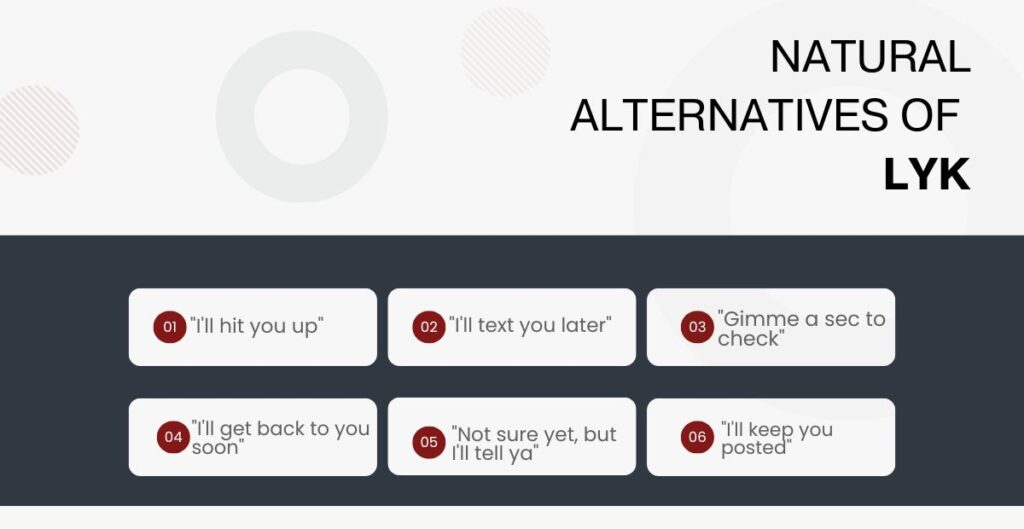
When you’re being casual:
- “I’ll hit you up”
- “Gimme a sec to check”
- “I’ll text you later”
When you want to sound reliable:
- “I’ll let you know by [specific time]”
- “I’ll get back to you soon”
When you’re keeping it light:
- “Not sure yet, but I’ll tell ya”
- “I’ll keep you posted”
Real-Life Examples
“You free Friday?” “Maybe, gotta check my work schedule first, lyk tomorrow”
“Who’s coming to Jake’s party?” “I’ll lyk by tonight, depends if I can get a ride”
“lyk the new hair color 🔥”
“Wanna study together?” “I’ll lyk, kinda tired rn”
“I lyk how you’re always late but somehow never sorry about it”
“You still dating that guy?” “lol it’s complicated, I’ll lyk when I figure it out myself”
Read More: What Does CYC Mean in Text? Here’s What People Actually Use It For
Platform or Culture Notes
On Snapchat, LYK feels super natural because everything there is fast and temporary. People use it between snaps, in quick replies, fitting the speed of the platform.
Instagram leans toward the “like” version more often. You’ll see “lyk this fit” or “lyk ur aesthetic” because Instagram’s whole vibe is visual and casual.
WhatsApp is where you see the most straightforward “Let You Know” usage, probably because that’s where actual life logistics happen. Group chats about carpools, family plans, work shifts—all get peppered with “I’ll lyk.”
Younger users barely think about it. For them, LYK is just part of how they type, same as “rn” or “ngl.” People over 30 might pause for a second, trying to decode whether it’s an acronym or a typo.
Common Misunderstandings
The biggest confusion: people can’t tell if “I’ll lyk” means yes, no, or maybe. That’s because it genuinely could mean any of those. Some people use it as a polite maybe-yes, others use it as a soft no, and some actually mean they’ll follow up.
Another mix-up happens with “LKY” versus “LYK.” If you see LKY, that’s usually a typo or it might mean “lucky” in gaming chats. Some people also mess up and type “lylyk” which looks like keyboard mashing but sometimes means “like, like, you know” in very casual contexts.
Text doesn’t have facial expressions or voice inflection, so “I’ll lyk” can sound excited, annoyed, or totally neutral depending on what you’re imagining.
The “from a girl” confusion is real too. Guys google “what does lyk mean when a girl says it” expecting some secret code. Truth is, it means the same thing regardless of gender. If she says “I’ll lyk about going out,” she’s either unsure or being polite. Don’t overthink it.
Read Also: What Does TT Mean in Text? The Real Answer
FAQs
Is saying “I’ll lyk” rude?
Not automatically, but it can be if you never follow up or if the situation needs a real answer.
Can LYK be sarcastic?
Yeah. “Oh sure, I’ll lyk when I care” is dripping with sarcasm. Tone comes from the surrounding words, not the acronym itself.
Does it mean the same thing everywhere?
Pretty much. English-speaking countries all use it the same way.
What if someone never actually lets me know?
That’s the risk. Some people use “I’ll lyk” as a soft no or to avoid confrontation. If they don’t follow up within a reasonable time, you have your answer.
Should I use it in work messages?
Probably not. It reads as too casual for most professional settings. Type out “I’ll let you know” unless your workplace is super relaxed about texting norms.
Wrapping This Up
LYK is one of those terms that seems simple until you actually think about it. Three letters doing the work of three words, sometimes meaning you’ll follow up, sometimes meaning you’re buying time, occasionally just being a typo for “like.”
The real skill isn’t knowing what it means—it’s knowing when someone actually plans to let you know versus when they’re just being polite. Pay attention to who follows through and who doesn’t. That tells you more than any definition ever could.